Can a death-receptor intervention also induce a countervailing immune-evasion signal?
This paper examined how DR5 agonist antibodies affect PD-L1 signaling in triple-negative breast, ovarian and other solid-tumor models. It complicates a simple “activate death, eliminate tumor” account and informs combination-design questions.
DR5 can initiate apoptosis, while PD-L1 can suppress antitumor immune responses through checkpoint signaling. A treatment strategy must account for both cellular effects.
Publication figures
Original figures, shown without alteration. Follow each source for the full legend, methods and panel-level data.
Evidence and methods
The authors studied DR5 agonist exposure and downstream immune-evasion signaling in the reported cell and tumor models, using molecular and functional assays described in the open-access article.
A counter-response appears
The study reports PD-L1-associated immune-evasion signaling after DR5 agonist antibody exposure in tested systems.
Context extends across models
The article examines TNBC, ovarian and additional solid-tumor contexts rather than a single cell line.
Design implication
The results motivate careful assessment of immune effects when designing DR5-directed combinations.
Inside the study
A treatment can trigger a counter-response
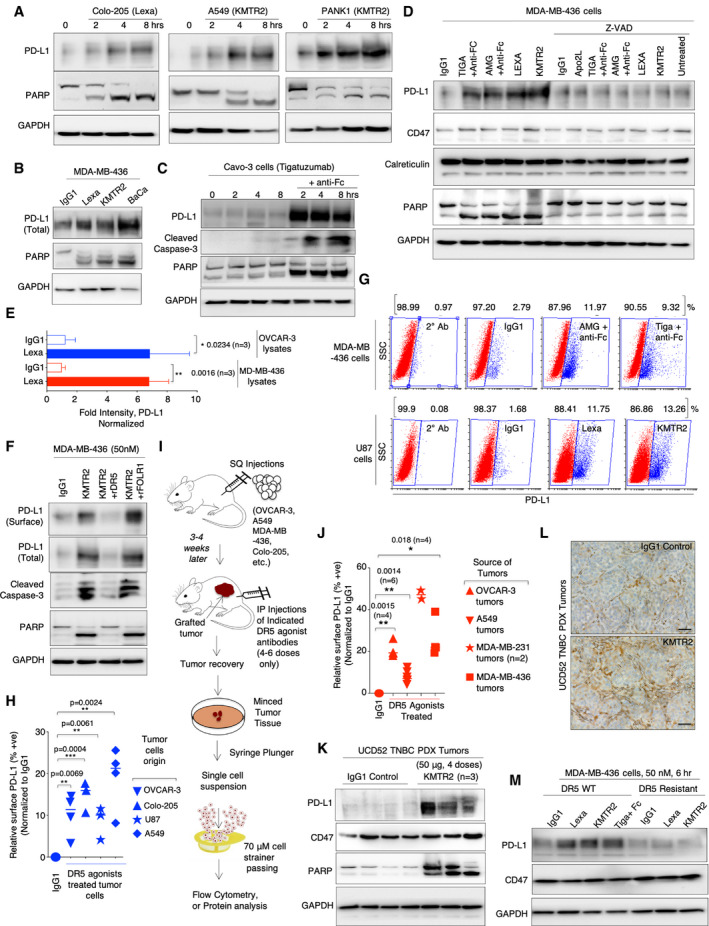
Across the tested tumor cell lines, DR5 agonist exposure increased cell-surface PD-L1 while also engaging apoptosis. Figure 1 connects the surface readout to the treatment context.
The pathway under test
The paper traces the response through caspase-8 and ROCK1 signaling and reports reduced proteasomal degradation of PD-L1. Perturbing this pathway tests whether the PD-L1 increase is a direct consequence of DR5 signaling.
Combination evidence
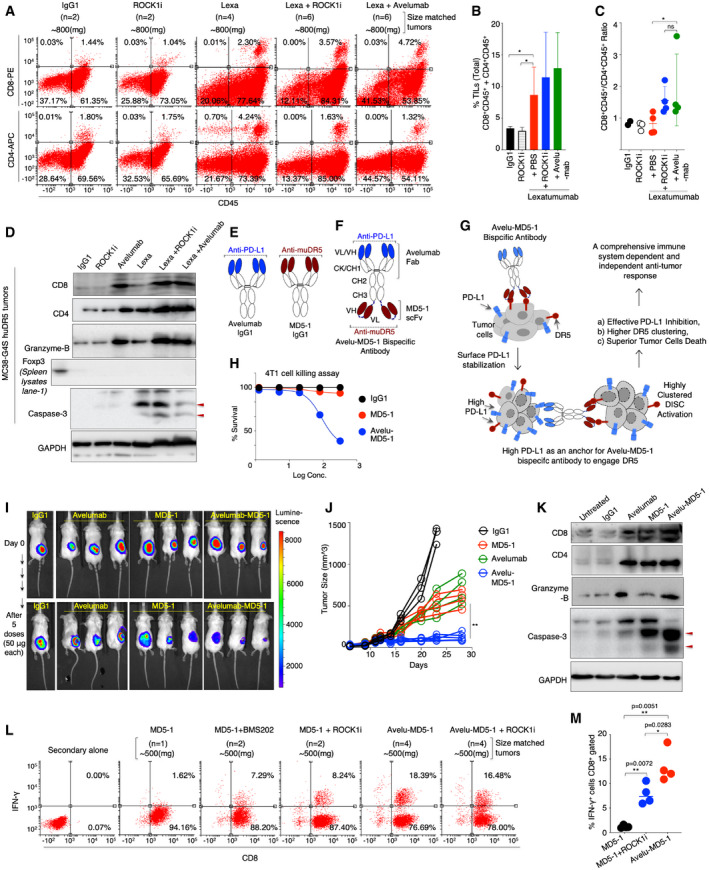
Mouse tumor experiments compare DR5 agonism with ROCK1 inhibition or PD-L1 blockade. The combination results motivate further study but are preclinical outcomes, not a demonstrated patient regimen.
Interpretation
The observed downstream response connects DR5 engagement to an immune-checkpoint consequence. It should be treated as a mechanism measured in the reported models, not a clinical trial result.
Evidence stage
Preclinical work; the study does not establish a patient outcome or prescribe a validated combination regimen.