Why do antibodies to the same death receptor differ in their functional response?
The study identifies a patch of positively charged DR5 residues as a determinant of activity for antibodies examined in solid-tumor models. It shifts attention from target presence alone to the details of receptor-antibody engagement.
Antibody binding is shaped by molecular surface chemistry and geometry. A receptor can be present without every antibody causing the same signaling outcome.
Publication figures
Original figures, shown without alteration. Follow each source for the full legend, methods and panel-level data.
Evidence and methods
The investigators combined receptor-level analysis with antibody-response experiments in the cell and tumor systems reported in the paper.
A charged patch regulates response
Perturbation and antibody studies connect positively charged DR5 residues to functional efficacy.
Binding is not sufficient by itself
The work helps distinguish receptor recognition from productive death signaling in the tested contexts.
Inside the study
Receptor surface chemistry
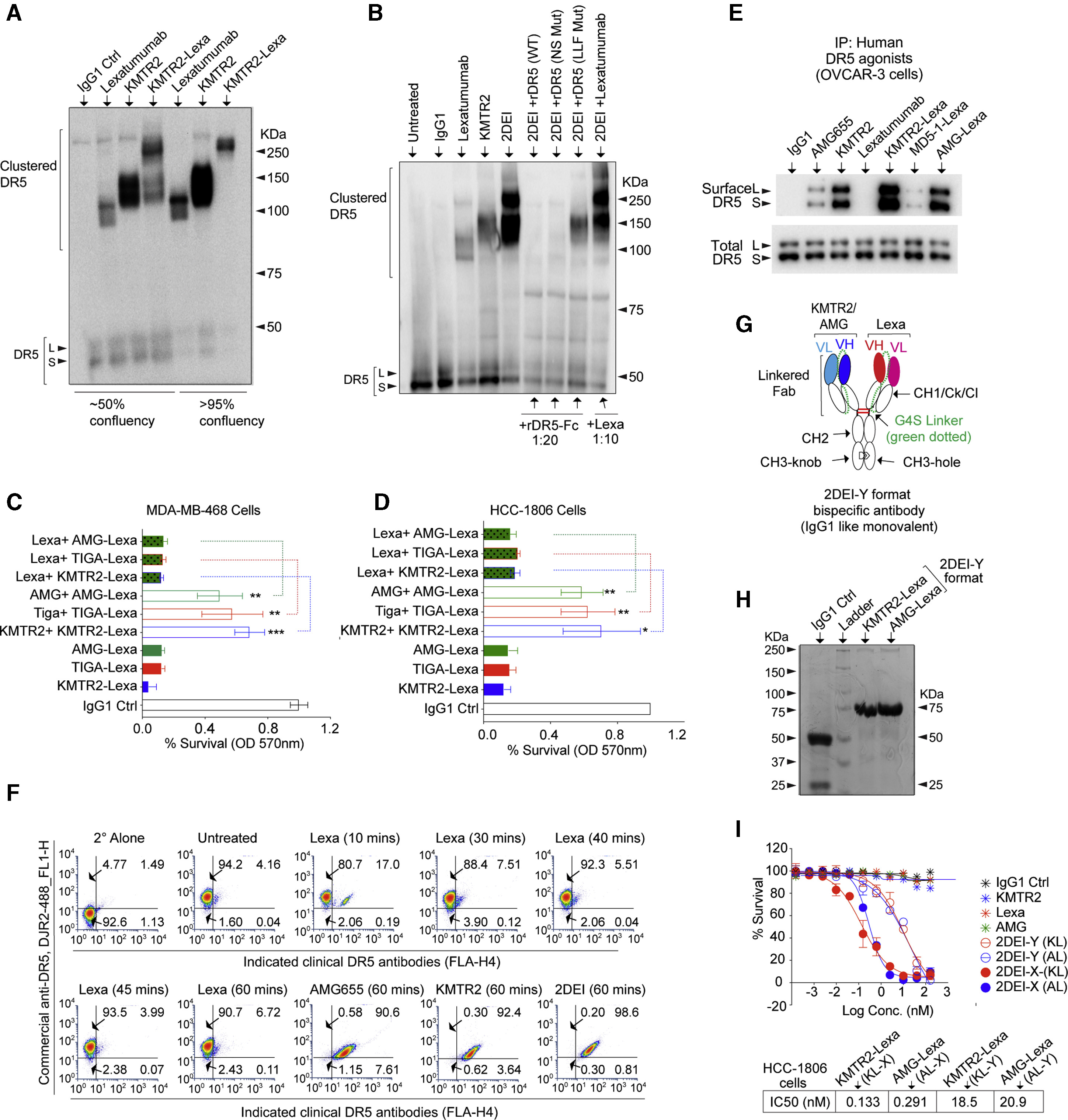
The paper identifies a positively charged patch in the DR5 ectodomain and tests its role in limiting receptor clustering. This gives a mechanistic reason why antibodies with measurable binding can differ in death signaling.
Antibody comparison
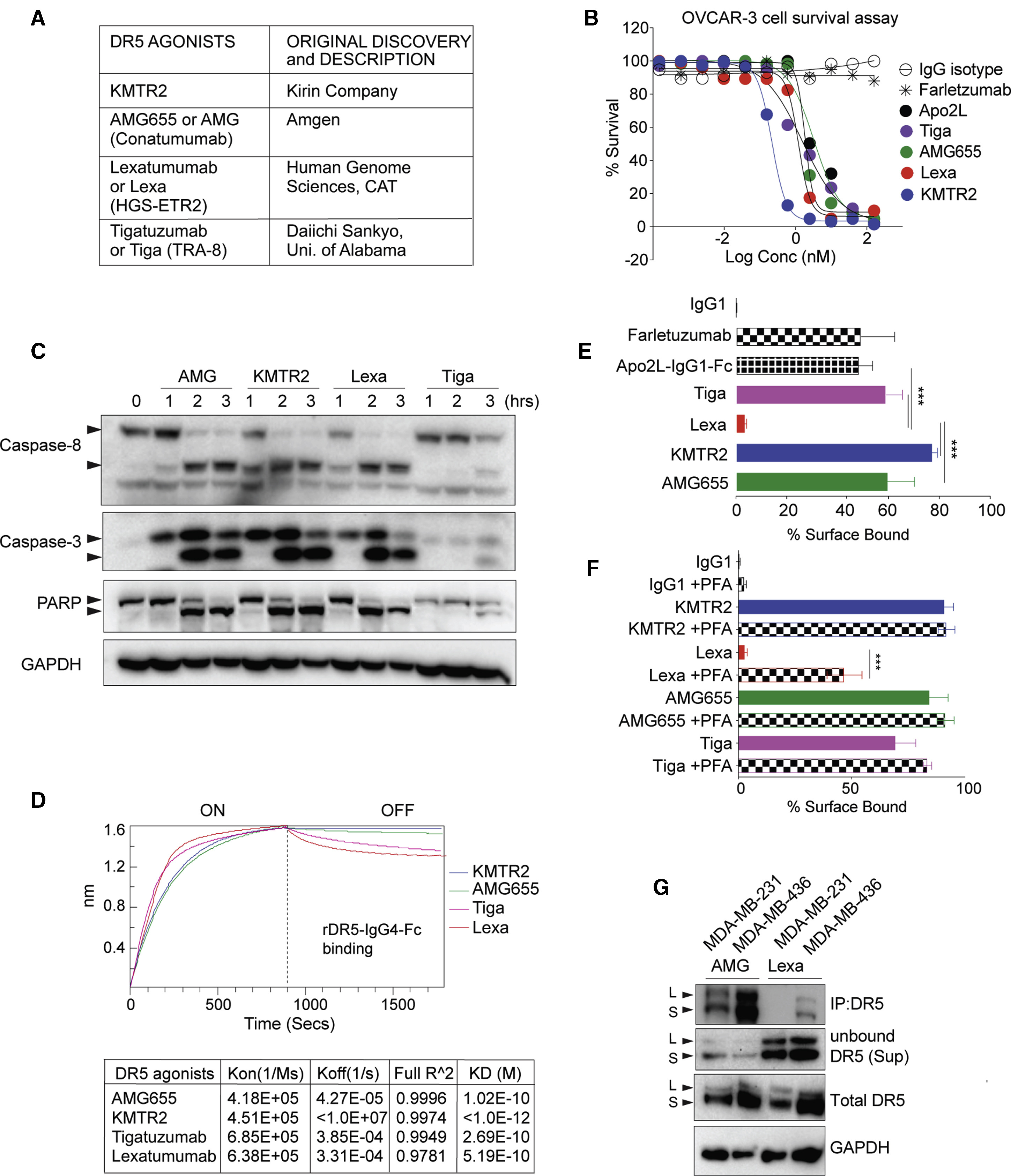
Figure 1 compares several DR5 agonists in binding, caspase and cell-survival assays. The comparison separates surface presence from productive apoptosis in the tested cell systems.
Testing a dual-specificity format
Figure 5 reports clustering and cytotoxicity measurements for 2DEI formats, including a linked-chain Y-shaped design. The reported advantage remains a preclinical result.
Interpretation
The paper supports a surface-interaction model for differential DR5 agonism. It does not imply that charge alone predicts all clinical responses.
Evidence stage
Mechanistic preclinical evidence; no patient-benefit conclusion follows from the receptor mapping.