Can altering microRNA-dependent X-inactivation control improve the phenotype in experimental Rett systems?
The 2025 Nature Communications study investigates a strategy related to X-chromosome inactivation and Rett syndrome phenotype in experimental models. Dr. Tushir-Singh is a coauthor on this interdisciplinary work, distinct from the central cancer-immunotherapy program.
Rett syndrome is associated with MECP2 dysfunction. In some cells an inactive X chromosome carries a functional copy, making reactivation a research direction.
Publication figures
Original figures, shown without alteration. Follow each source for the full legend, methods and panel-level data.
Evidence and methods
The paper studies microRNA-dependent control and phenotype measures in its reported experimental systems. Consult its full text for model- and intervention-specific details.
A regulatory strategy is tested
The publication reports targeting microRNA-dependent X-inactivation control.
Phenotype is measured in models
The title and study describe improved Rett-related phenotype in experimental settings, not an established patient treatment.
Inside the study
A collaborative genetics study
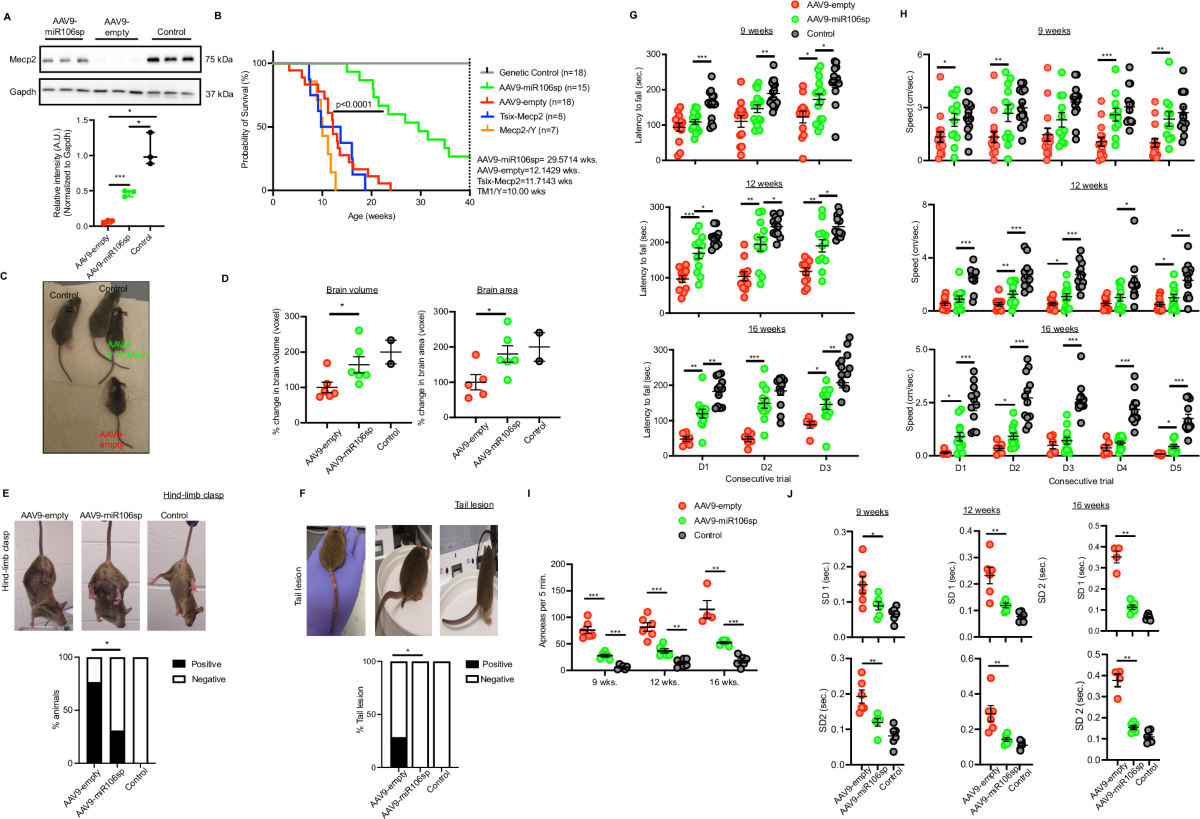
The 2025 paper uses genetic screening to identify microRNAs involved in X-chromosome inactivation, then tests miR106a inhibition in experimental Rett systems. The paper lists Tushir-Singh among researchers who advised on experimental design.
From expression to phenotype
Figure 5 reports Mecp2 expression and neurobehavioral measurements after AAV9-miR106sp delivery in mice. Those data motivate further study; they do not establish a patient treatment.
Interpretation
The proposed route acts through regulation of X inactivation. It should be understood as a collaborative experimental research result.
Evidence stage
Preclinical and interdisciplinary; it is not a clinical Rett therapy and does not establish Dr. Tushir-Singh as sole lead of the program.